
Hiroshima
& Miyajima
Peace Memorial Park and the Atomic Bomb Dome, Hiroshima Castle, and the floating torii of Itsukushima Shrine — all in a single private day, departing straight from your Hiroshima hotel. Your chauffeur handles the ferry crossing, the parking, and the pace, with an easy detour to the Kintaikyo Bridge in Iwakuni along the way.
Peace Memorial Park
and the Atomic Bomb Dome
At 8:15am on August 6, 1945, the atomic bomb detonated near the Aioi Bridge, close to the Nakajima district that today forms the heart of Peace Memorial Park. The Atomic Bomb Dome — the skeletal remains of the former Hiroshima Prefectural Industrial Promotion Hall — is the only structure left standing near ground zero, and has been a UNESCO World Heritage Site since 1996. It stands largely as it was found, a deliberate choice to preserve the memory of that morning.
The 122,000 m² park around it was designed by architect Kenzo Tange and opened in 1954. Free to enter and open 24 hours, it draws over a million visitors a year. The Cenotaph frames the Dome across the Pond of Peace in a single sightline, and the Children's Peace Monument, inspired by Sadako Sasaki and her paper cranes, is one of the park's most visited memorials. The Peace Memorial Museum sits within the park and has its own separate admission and hours if you'd like to go inside.
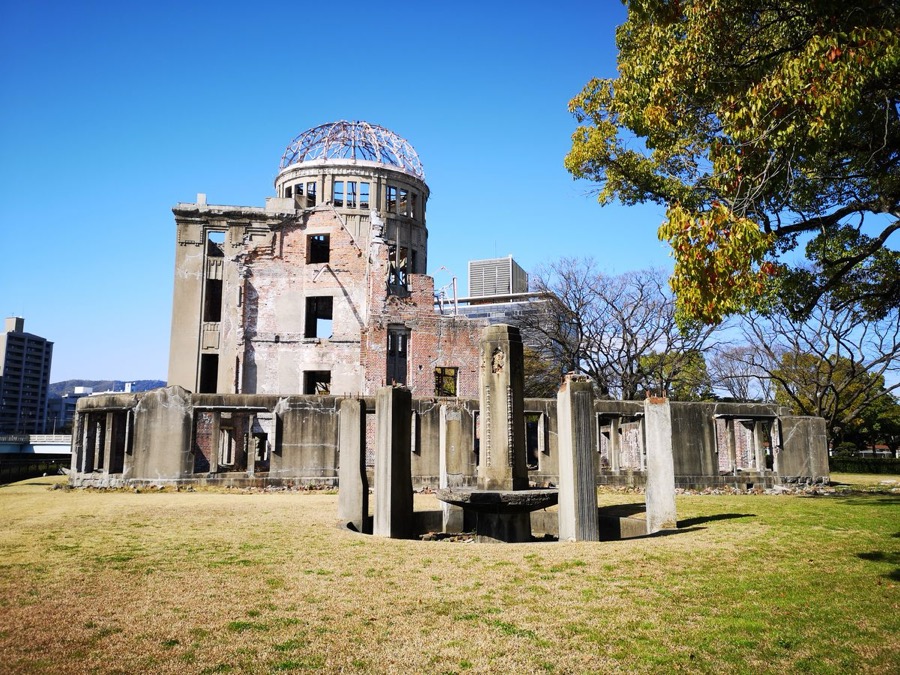
The Cenotaph frames the Atomic Bomb Dome across the Pond of Peace — the park's central sightline.
This part of the day is never rushed. Some guests spend about an hour walking the park and the Dome; others prefer a full morning, museum included. Your driver simply follows your pace.
Hiroshima Castle and Shukkei-en Garden
Hiroshima Castle was originally built in 1589 by Mōri Terumoto. Like much of the city, it was destroyed in the atomic bombing, and the keep standing today is a 1958 reconstruction that now serves as a history museum — a faithful replica rather than the original structure, and we say so plainly. It's about a 10–15 minute walk from Peace Memorial Park. A short distance further, Shukkei-en Garden began in 1620 as a villa garden for the Asano clan, a "shrunken-scenery" landscape modelled on famous views in miniature. It too was heavily damaged in 1945 and has since been fully restored — a quieter, greener symbol of the city's recovery, known for cherry blossoms in spring and plum blossoms in winter. It's roughly a 30 minute walk from Peace Memorial Park.
Miyajima and the floating torii
Miyajima is the centerpiece of the afternoon. The island itself is ferry-only — there is no car access to Itsukushima Shrine — so your driver parks near Miyajimaguchi Pier and you cross as foot passengers on the JR or Matsudai ferry, about a 10 minute crossing, followed by a further 10 minute walk to the shrine. Driving time from central Hiroshima to Miyajimaguchi runs approximately 30–45 minutes depending on route and traffic. A small separate ferry fare applies, payable at the pier.
The shrine's torii gate famously appears to float when the tide rises above roughly 250cm, a window of about two to three hours around each of the day's two daily high tides — we'll check the tide table for your actual tour date when planning. At low tide, below about 100cm, visitors can instead walk out across the sand to the base of the torii — a different experience, but still very much worth seeing up close. Near the Miyajima ferry pier, Kakiya is a well-known oyster specialty shop, a five-minute walk from the boat — fitting, since Hiroshima Prefecture produces roughly 60–70% of Japan's oysters.
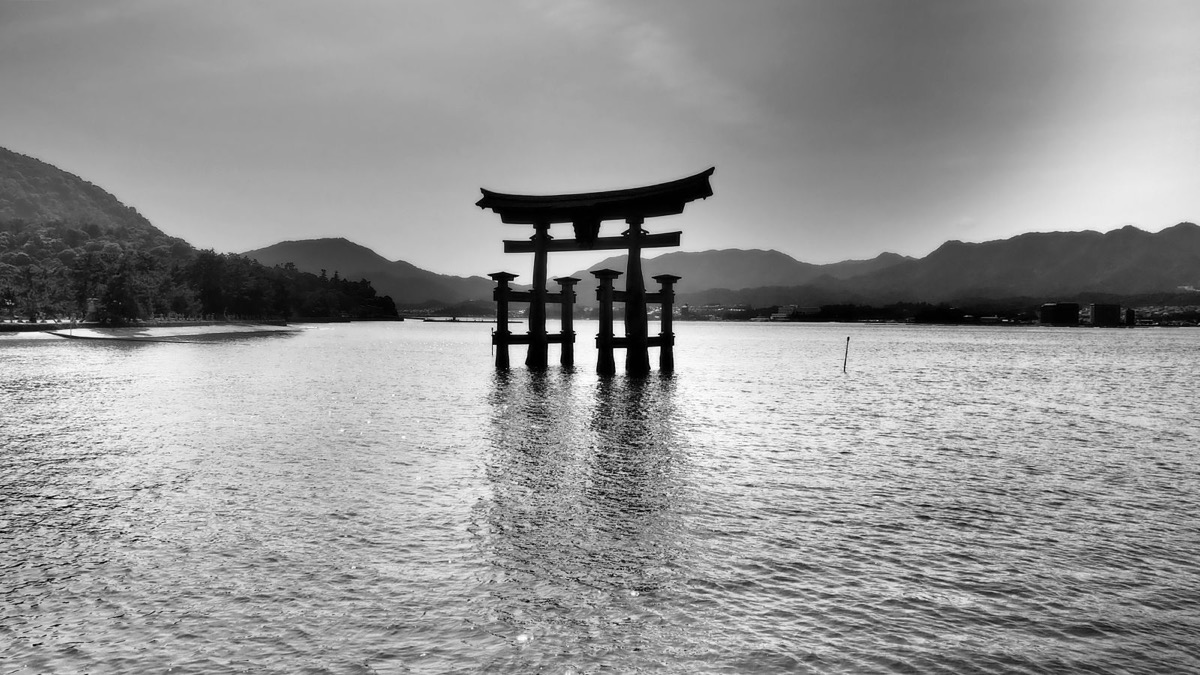
The floating torii of Itsukushima Shrine — the defining image of Miyajima, tide permitting.
Food along the way
Hiroshima-style okonomiyaki is built differently from the Osaka version: a thin batter, heavy on cabbage, layered over yakisoba noodles with toppings like oyster, squid, or cheese. Okonomimura, a multi-floor building packed with okonomiyaki counters, is a well-known stop, and Mitchan Souhonten is widely credited with inventing the modern style. Between the castle, the garden, and the ferry crossing, there are natural windows to fit lunch in.
The Iwakuni detour
On the way back from Miyajima, the Kintaikyo Bridge in Iwakuni is an easy add-on in the same direction, without a separate trip. Built in 1673, this distinctive arched wooden bridge sits about 49 km / approximately 43 minutes' drive from Hiroshima. It's entirely optional — skip it if the day is already full, or add it if you have time to spare.
Hiroshima, Miyajima,
and back
-
8:00
Depart your Hiroshima hotelShort drive into central Hiroshima to Peace Memorial Park
-
8:30
Peace Memorial Park & Atomic Bomb Dome1 to 3 hours depending on your pace — museum entry optional and separately timed
-
10:30
Hiroshima Castle & Shukkei-en GardenShort drive or walk between sites — about 1 to 1.5 hours combined
-
12:00
Lunch — Hiroshima-style okonomiyakiOkonomimura or a driver recommendation — about 45 minutes to an hour
-
13:00
Drive to Miyajimaguchi PierApprox. 30–45 minutes depending on route and traffic
-
13:45
Ferry crossing & Itsukushima Shrine~10 minute ferry, ~10 minute walk, then 1.5 to 2 hours on the island
-
16:15
Iwakuni & Kintaikyo Bridge (Optional)Approx. 43 minutes' drive from Hiroshima — 30 to 45 minutes at the bridge
-
16:30–18:00
Return to your Hiroshima hotelTotal: about 8–9 hours including the Miyajima crossing. Skip Iwakuni and the day shortens by roughly 1.5–2 hours.
Hiroshima & Miyajima by season
Peace Memorial Park and Itsukushima Shrine are worth visiting any time of year, but the island's maple valleys and the garden's blossoms give autumn and spring their own particular character.
Shukkei-en Garden is one of Hiroshima's noted cherry blossom spots in spring, its restored Asano-clan landscape framed in seasonal pink — a quieter alternative to the busier city viewpoints.
Mild spring temperatures make the walk between Peace Memorial Park, the castle, and the garden an easy, unhurried morning before heading to Miyajima in the afternoon.
Spring greenery around the Pond of Peace and the Cenotaph gives the park a different feel from its bare winter look, without changing what the space is here for.
Calm spring conditions generally make the Miyajimaguchi ferry crossing straightforward, though as always we'll check timing and tides for your specific date.
Hiroshima summers run hot and humid, similar to much of western Japan. Your chauffeured vehicle is air-conditioned throughout, so the heat is a factor only during time spent outdoors at each site.
Peace Memorial Park and Shukkei-en both offer tree cover, and pacing time at each site with breaks in mind makes summer visits more comfortable.
The ferry crossing and the shrine's waterside setting bring a welcome breeze off the Seto Inland Sea, a mild relief from the mainland heat.
Summer's longer daylight hours give a little more flexibility for timing the day around the tide and the day's heat.
Miyajima's autumn colours run roughly October 15 through December 15, peaking around mid-November. Momijidani Park, at the base of Mt. Misen, is the key maple valley, with the grounds of Daisho-in Temple also known for their autumn colour.
A "Momiji Festival" illumination lights the island's maples from sunset to 9pm between November 8 and 30 — worth timing a visit around if your schedule allows an evening return.
Cooler, clearer autumn air makes the walk between Peace Memorial Park, the castle, and Shukkei-en comfortable, with good conditions for photography throughout the day.
Autumn's comfortable weather is a popular time for guests who want a fuller morning at Peace Memorial Park and the museum before heading on to Miyajima.
Winter brings the thinnest crowds to Peace Memorial Park, the castle grounds, and Miyajima, making it an easier season to move through each site at an unhurried pace.
Shukkei-en Garden is known for its winter plum blossoms, a quieter seasonal counterpart to the garden's spring cherry trees.
Winter's clear air and calm seas often make for sharp views across to Miyajima and along the Seto Inland Sea coastline during the ferry crossing.
The bare trees and quiet grounds of Peace Memorial Park in winter suit the reflective nature of the visit for many guests.
Everything handled,
nothing to arrange
Select your date, vehicle type, and group size. We confirm within a few hours with full details and your driver's contact information.
Your driver meets you in the lobby at the agreed time, typically 8:00–8:30 AM for this route.
Spend an hour or a full morning at Peace Memorial Park, skip the Iwakuni stop entirely, or ask your driver to reorder the day around the tide and the crowds.
Drop-off at your hotel when you're ready. No train transfers, no timetables, no luggage storage — your driver handles the Miyajima ferry logistics too.
Travelling with more
than four?
Our convoy options handle groups of any size — two or more vehicles travelling together so no one gets separated. All combinations below are available for the Hiroshima & Miyajima route.
Two private Alphards in convoy. Perfect for families or two couples travelling together.
VIP passengers in the Alphard, the rest in the HiAce. Groups stay together without everyone in a bus.
Full group capacity across two HiAces. Both vehicles depart and arrive together.
Full fleet for large groups. Corporate outings, multi-family travel, custom combinations on request.
Frequently asked questions
Is the price per person or per vehicle?
All Hire Taxi Japan prices are per vehicle, not per person. A Toyota Alphard (1–4 passengers) is ¥110,000 for the full day; a Toyota HiAce (up to 9 passengers) is ¥120,000. Larger parties can book multiple vehicles in convoy. A small separate ferry fare for the Miyajima crossing applies, payable at the pier.
Why does Peace Memorial Park matter, and how is the visit paced?
Peace Memorial Park sits at the hypocenter area of the August 6, 1945 atomic bombing, and the Atomic Bomb Dome — a UNESCO World Heritage Site since 1996 — is the only structure left standing near ground zero. We don't rush this part of the day. Some guests spend about an hour walking the park and Dome; others prefer a full morning, including the Peace Memorial Museum, which has its own separate admission and hours. Your driver paces the day around whatever feels right to you.
What if the tide is out when we visit Miyajima?
The famous floating effect happens at high tide, when the water rises above about 250cm and the torii gate appears to float on the sea. At low tide, visitors can instead walk out across the sand to the base of the torii and see it up close — a different experience, but still very much worthwhile. Tide times vary by date, so ask us when planning your tour date.
Can the Iwakuni detour be skipped?
Yes. The Kintaikyo Bridge stop in Iwakuni is entirely optional and can be added or dropped depending on your pace at Miyajima and Peace Memorial Park. Just let your driver know at booking or on the day.
How long is the Hiroshima and Miyajima tour?
Plan for roughly 8–9 hours door to door from your Hiroshima accommodation, covering Peace Memorial Park, Hiroshima Castle, and Miyajima, with time built in for the ferry crossing. Adding the Iwakuni detour extends the day by about 1.5–2 hours.
Do the drivers speak English?
Yes. All Hire Taxi Japan chauffeurs communicate in English and are licensed professional drivers. They handle navigation, parking, and timing — and share local recommendations — but are drivers rather than licensed tour guides.
Is there wheelchair or mobility access at these sites?
Accessibility varies by site and by the day's conditions, particularly at Miyajima where the shrine approach involves a ferry crossing and some walking. Please ask at booking so we can plan the day around your needs.
How do I book or ask a question?
Book online via the Japan Tour Package page on hiretaxijapan.com, or message us on WhatsApp at +81 70 1265 4460 for a custom plan. We confirm availability and your driver's details within a few hours.
Peace Memorial Park to
the floating torii, door to door
From your Hiroshima hotel to Peace Memorial Park, Hiroshima Castle, and Miyajima, with an optional Iwakuni stop on the way back. At your pace, no bus, no schedule.