
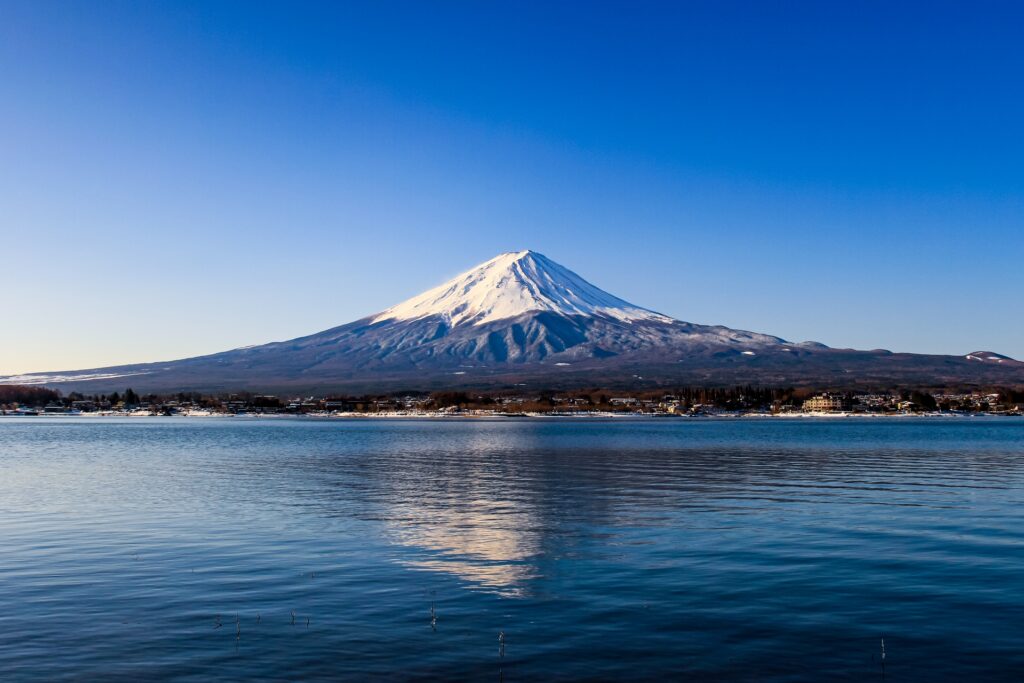
Mt. Fuji Day Trip is among the most anticipated experiences for travelers visiting Japan. Seeing the mountain’s perfectly symmetrical form, snow-capped peak, and quiet presence across lakes and landscapes is often a highlight of the journey. Yet planning a day trip from Tokyo to see Mt. Fuji can be surprisingly complex. The mountain is visible from several regions, each offering different scenery, viewpoints, and travel experiences.
Choosing the right route often shapes the entire day — from the type of scenery you encounter to how much time you spend traveling between stops. Weather conditions, seasonal visibility, and pacing also influence what kind of experience you have.
Understanding the main Mt. Fuji day trip options helps ensure the journey feels relaxed, scenic, and rewarding rather than rushed. Here’s how to choose the best route and viewpoints for your Mt. Fuji day trip from Tokyo.
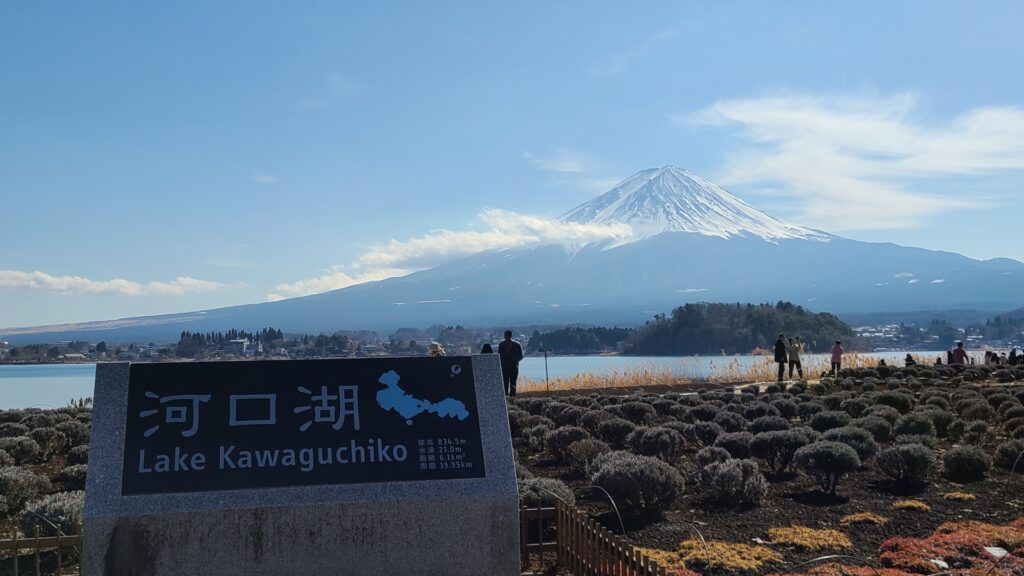
Fuji Five Lakes – Classic Postcard Views
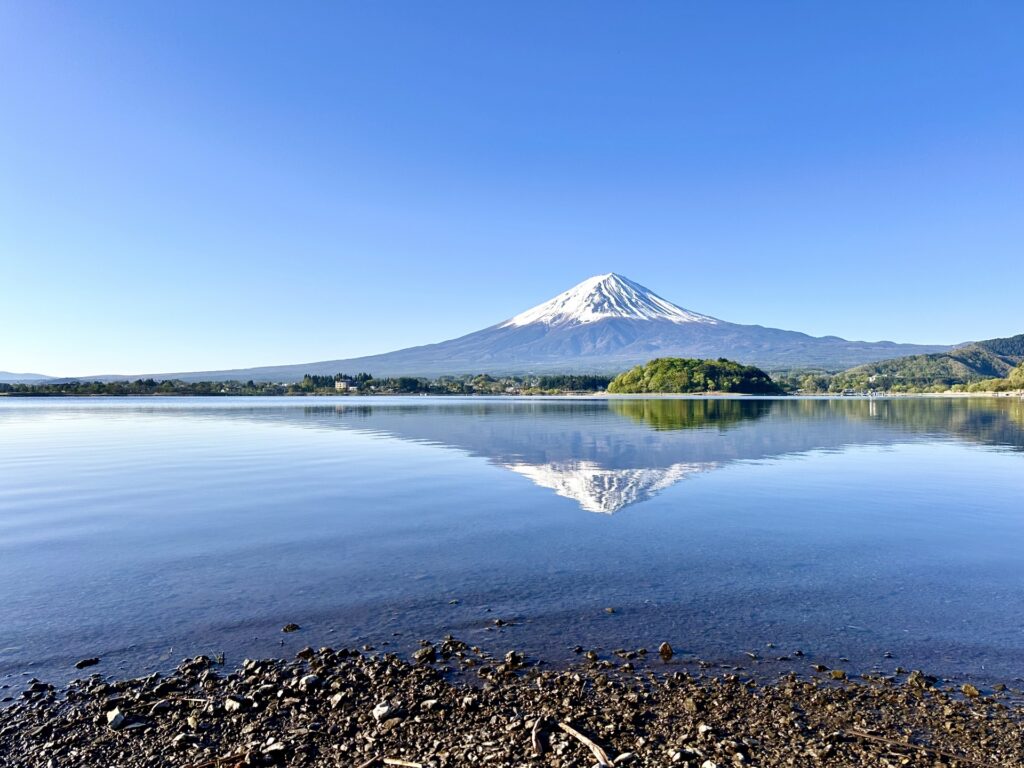
The Fuji Five Lakes region, particularly around Lake Kawaguchi, offers some of the most recognizable views of Mt. Fuji. The mountain rises dramatically above the lakeshore, often reflected in still water on calm days. This area provides the clearest, most open perspectives of the mountain and feels distinctly scenic and spacious.
The atmosphere here is peaceful and nature-focused. Visitors encounter lakeside promenades, quiet villages, and wide viewpoints rather than dense urban surroundings. Seasonal changes also transform the scenery — cherry blossoms in spring, lush greens in summer, foliage in autumn, and crisp snow-capped views in winter.
Highlights:
- Lake Kawaguchi shoreline viewpoints
- Mt. Fuji reflections on calm mornings
- Oshino Hakkai’s traditional village ponds
- Panoramic ropeway overlooks
- Scenic countryside roads
This route is ideal for travelers seeking iconic Fuji landscapes and photography opportunities.
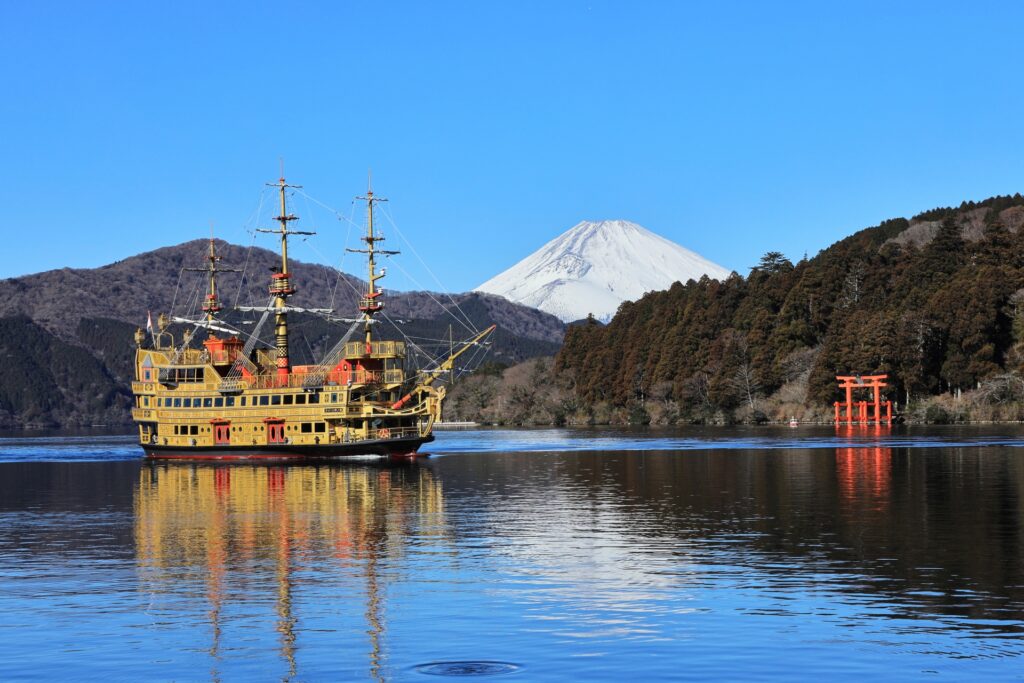
Hakone – Fuji Framed by Nature & Culture
Hakone offers a different perspective on Mt. Fuji, where the mountain appears framed by forests, lakes, and volcanic terrain. Views here are often more atmospheric than direct, with Fuji rising beyond Lake Ashi or distant ridgelines.
Hakone blends nature with cultural attractions, creating a varied day that combines scenic landscapes with art museums, traditional shrines, and hot spring towns. The journey itself includes mountain roads and elevated viewpoints, adding a sense of travel through changing terrain.
Highlights:
- Lake Ashi lakeside Fuji views
- Hakone Shrine’s lakeside torii gate
- Owakudani volcanic valley
- Mountain panoramas along scenic drives
- Art museums and gardens
This route suits travelers who want Fuji scenery alongside cultural experiences and varied landscapes.
Choosing Based on Visibility & Season
Mt. Fuji visibility changes with weather and seasonal conditions. Cold, dry air in late winter and early spring often produces the clearest views of the year, when the mountain appears sharply defined against blue skies. Snow remains on the upper slopes, creating the classic white peak most visitors expect.
During warmer months, haze and cloud cover become more common, sometimes obscuring the mountain entirely. This makes timing and route flexibility especially valuable.
For optimal viewing:
- Mornings tend to be clearest
- Winter and early spring offer highest visibility
- Calm weather improves reflections
- Elevated viewpoints enhance perspective
Selecting a route that allows adaptable timing increases the likelihood of seeing Fuji clearly.
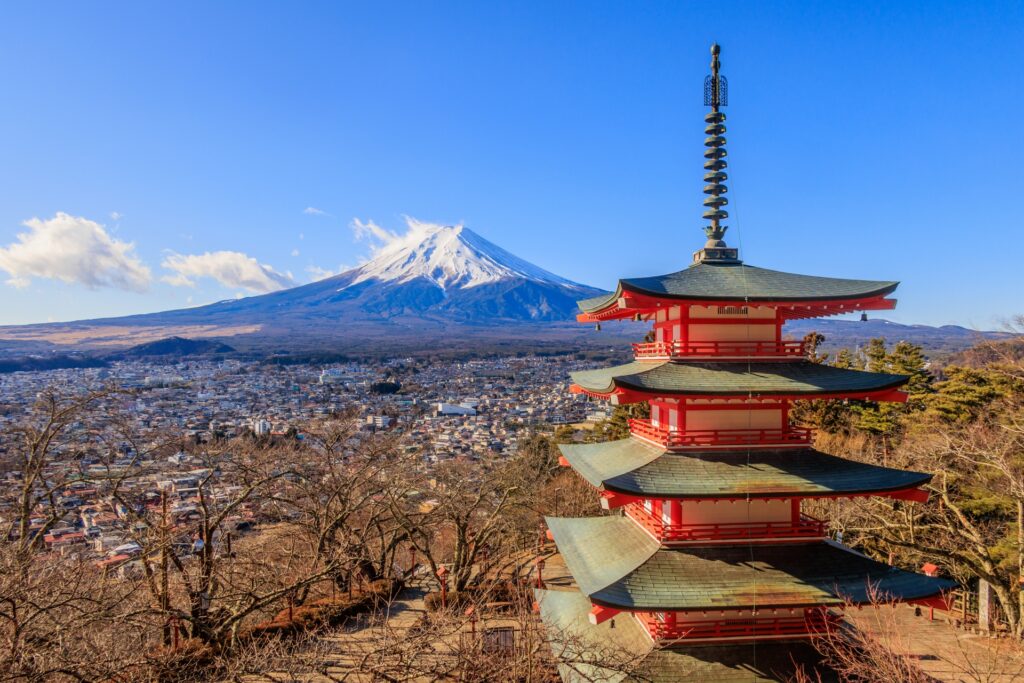
Scenic Flow of the Day
Beyond visibility, the overall feel of the journey differs between routes. Fuji Five Lakes emphasizes open landscapes and lakeside scenery, while Hakone provides a layered experience of mountains, forests, and cultural stops. Some travelers prioritize the iconic postcard view, while others prefer variety and atmosphere.
A private vehicle allows the day to flow naturally between viewpoints, avoiding rigid schedules. Travelers can pause at scenic spots, adjust routes if clouds shift, or extend time at locations where Fuji appears most clearly. This flexibility often defines the difference between simply visiting Fuji and truly experiencing it.
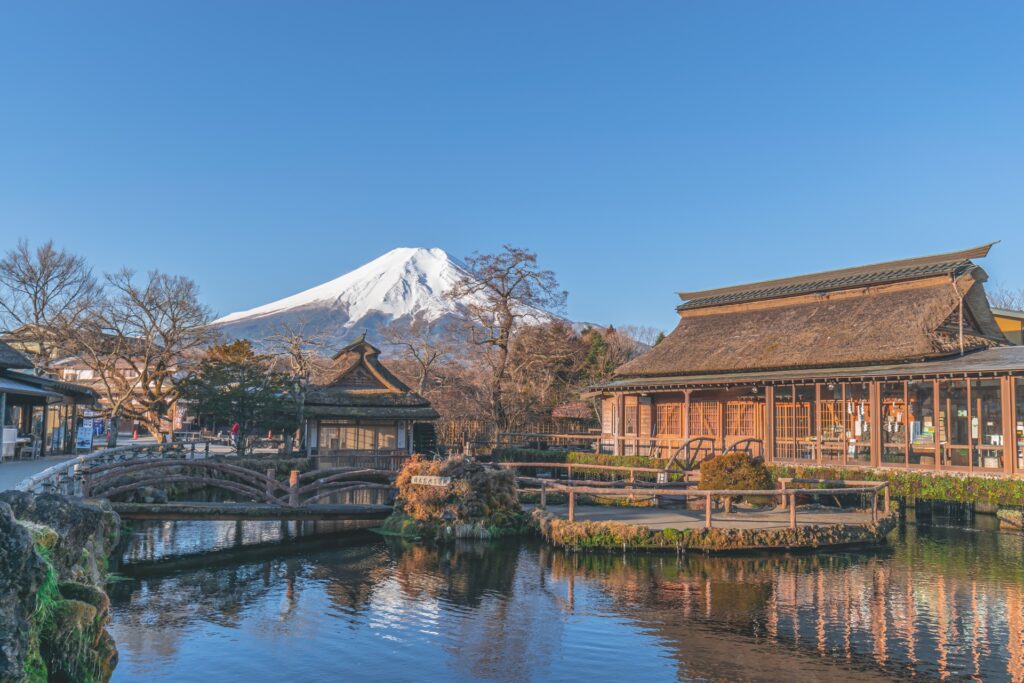
Comfort & Accessibility of Private Mt. Fuji Day Trips
Public transport routes to Fuji areas often involve multiple transfers and fixed timetables, which can limit adaptability. A private day trip removes these constraints, allowing direct travel between Tokyo and Fuji viewpoints without logistical interruptions.
With Hire Taxi Japan, travelers benefit from:
- Door-to-door hotel pickup
- Comfortable climate-controlled vehicles
- Flexible timing based on weather
- Direct access to viewpoints
- Seamless transitions between stops
This comfort is especially valuable in cooler seasons, when waiting outdoors or navigating stations can reduce enjoyment.
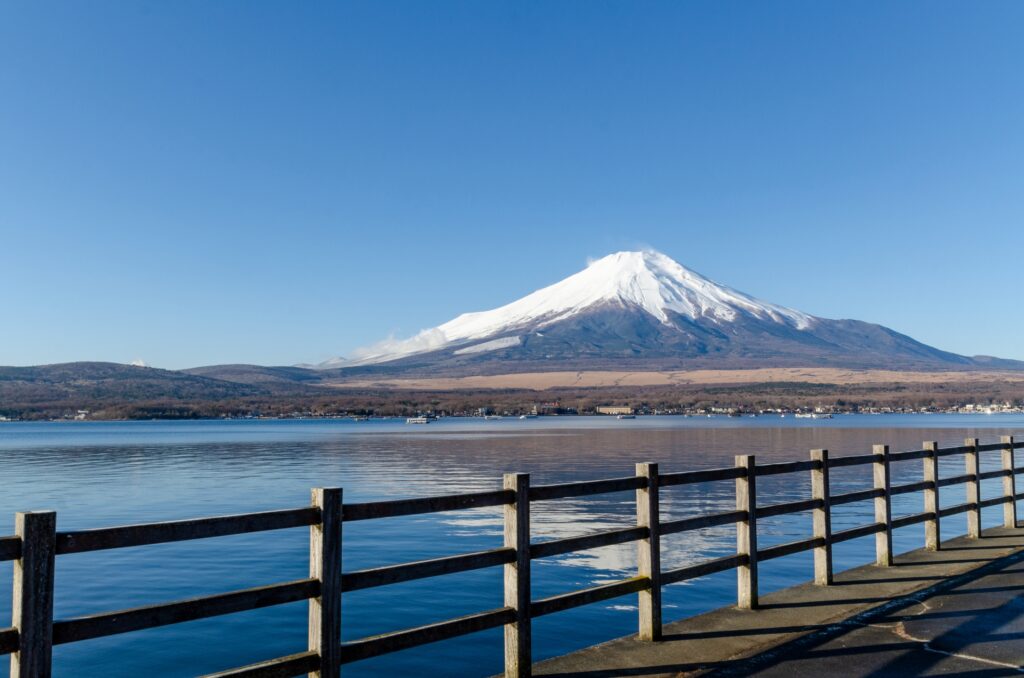
Which Route Is Right for You?
Choosing between Fuji Five Lakes and Hakone depends on travel style and priorities:
Choose Fuji Five Lakes if you want:
- The most iconic Fuji views
- Lake reflections and open scenery
- Traditional villages and countryside
- Photography-focused landscapes
Choose Hakone if you prefer:
- Mixed scenery and cultural sites
- Lake and mountain combinations
- Scenic drives through varied terrain
- Museums and shrines alongside Fuji views
Both routes offer rewarding experiences — the difference lies in atmosphere and pacing.
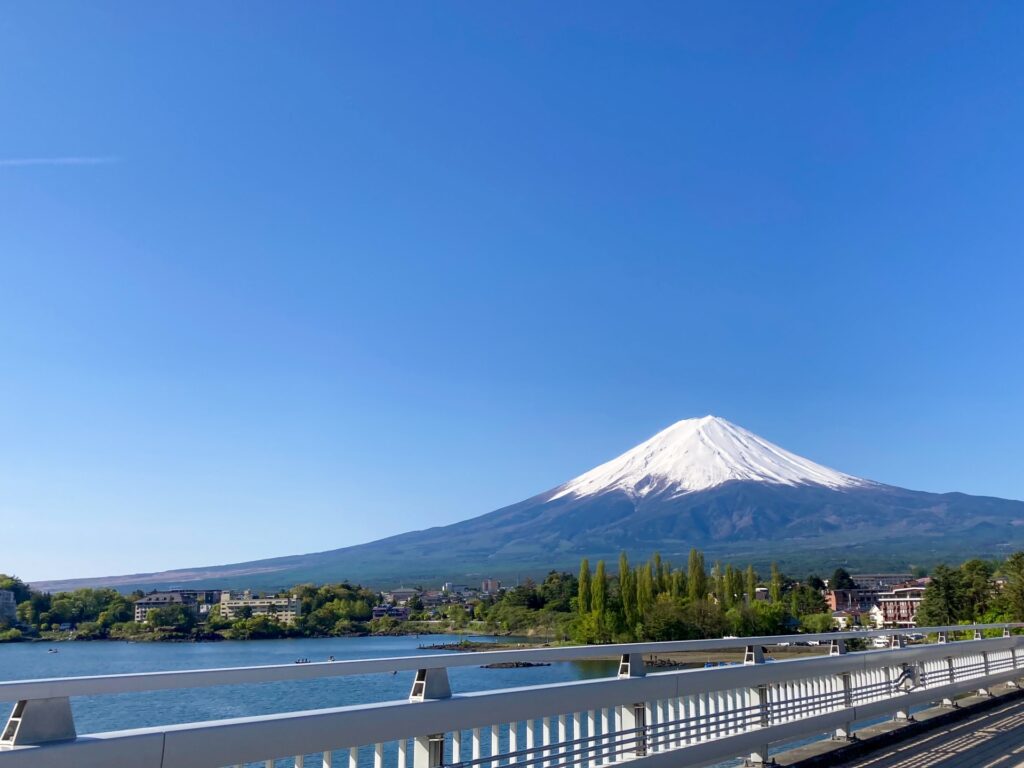
Experiencing Mt. Fuji at Its Best
Mt. Fuji day trips are not only about reaching the mountain, but about experiencing the landscapes that surround it. Lakeshores, forests, villages, and viewpoints together create the sense of place that defines Fuji’s presence.
With the right route and timing, the journey becomes calm and memorable rather than hurried. Clear skies, quiet viewpoints, and flexible pacing allow travelers to appreciate the mountain in its full scale and beauty.
A day trip to Mt. Fuji from Tokyo is more than a sightseeing excursion — it is an encounter with one of Japan’s most enduring natural icons, experienced at your own rhythm.